Oct 2, 2026
Ambition vs Attachment
5 min read
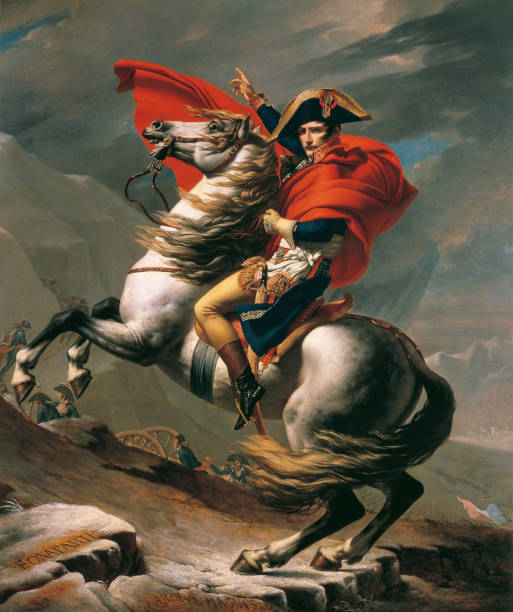
Napoleon at the height of his legend: the outsider from Corsica painted as a hero.
In 1798, a British ship intercepted a bundle of letters from Napoleon's army in Egypt. One was written to his brother Joseph. In it, Napoleon admitted he knew his wife Josephine was having an affair back in Paris. The British printed the letters in London for the world to read.
The most feared general in Europe had just had his heartbreak published as propaganda.
That is the Napoleon I want to talk about. Not the conqueror, but the man who could read an entire battlefield and still couldn't read his own marriage.
The Outsider Who Took France
Napoleon came from Corsica, from a family with no real wealth or influence, in an age when birth decided almost everything. Europe belonged to monarchs and inherited privilege. He had neither.
Then the French Revolution tore the old order apart. The king and queen were executed, and France was left in chaos. Out of that chaos, Napoleon rose through talent, ruthless work and a mind that never stopped planning. By 1804, he had crowned himself Emperor of the French.
How is that possible? One answer is ambition. He studied, planned and fought with an intensity few men have ever matched. He understood armies, laws and politics better than the people who served him.
But ambition has a cost, and Napoleon paid it where he was weakest.
Napoleon and Josephine
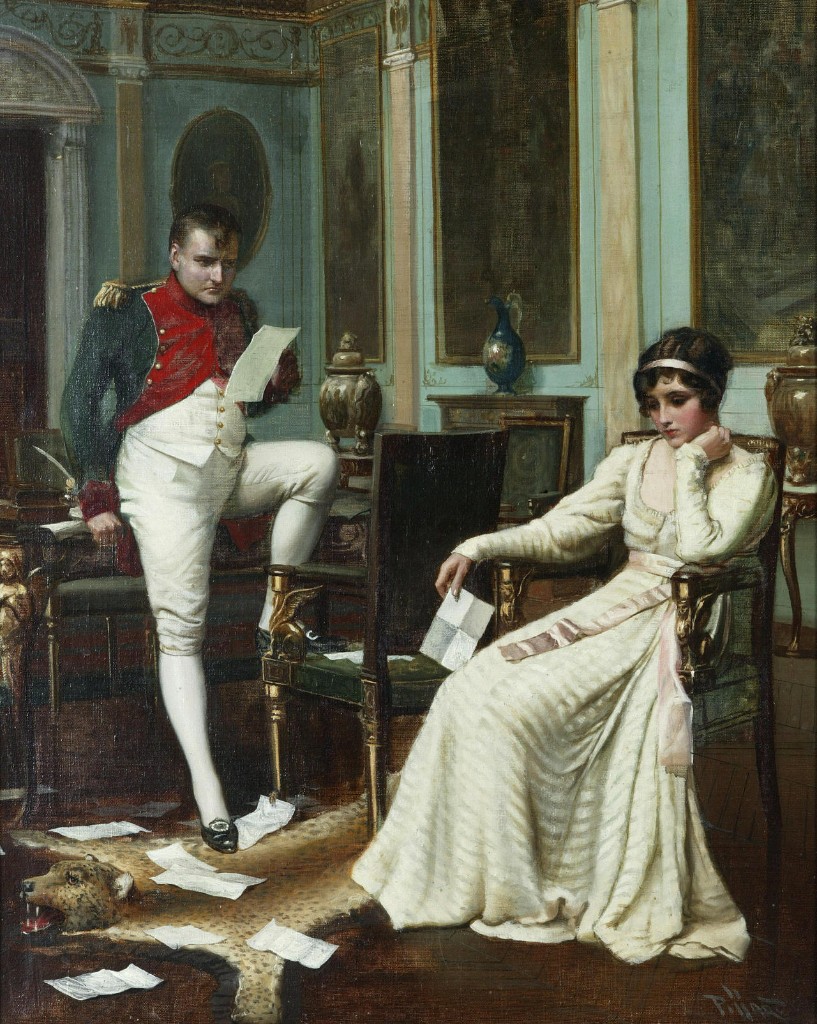
The emperor and his wife: letters in hand, distance between them.
Napoleon loved Josephine, and his early letters to her are almost desperate. But his ambition demanded all of his time, and the marriage suffered for it.
It was complicated on both sides. Josephine had her affairs, and Napoleon was unfaithful too, even in Egypt. Yet when he learned the truth, he was shaken enough to put it in writing, and that letter became a weapon in his enemies' hands. His enemies didn't need to beat his tactics. They only had to show that behind the emperor was a man who could feel jealousy, insecurity and pain.
The attachment that made him human also made him vulnerable.
The Price of the Dynasty
In 1804, Josephine was crowned empress beside him. Five years later, Napoleon divorced her.
The reason was simple and brutal: she could not give him an heir. An empire needs a dynasty, so he chose the dynasty. In 1810 he married Marie Louise of Austria, a princess picked for her bloodline, and a son was born the following year.
This is ambition beating attachment in its clearest form. He didn't stop loving her. He let her go anyway, because the empire demanded it.
And the empire did not last. In 1812 he marched into Russia, where the army retreated deep into its own territory and let the vast distances and the winter destroy his forces. In 1814 he was defeated and sent into exile. That same year, Josephine died.
He had given up the person he loved for an empire, and then lost the empire too. Years later, dying on the island of St. Helena, his last words were reportedly about France, his army and Josephine.
Ambition vs Attachment
This brings us to the central question:
Can extreme ambition and deep personal attachment coexist peacefully?
My answer is that rarely, and never without a price.
Attachment demands presence. Ambition demands absence.
Ambition says: "Go further." Attachment says: "Stay."
The more intensely you chase something great, the more everything else becomes secondary: time, attention, relationships, comfort, even peace. Being exceptional in one part of life doesn't make you exceptional in all of it. A person can command an army and still fail to talk to their partner. They can build a company and fail to build a family. They can become historically important and still be lonely.
Napoleon Was Not Alone
The same trade appears again and again in history:
- Leonardo da Vinci left behind art, anatomy and inventions centuries ahead of his time. He left behind no known partner and no family.
- Isaac Newton rewrote physics. He never married and lived much of his life in solitude.
- Nikola Tesla helped build the electrical age. He never married and died alone in a hotel room.
- Albert Einstein changed our understanding of the universe, but his first marriage ended in divorce and he grew distant from his sons.
- Ludwig van Beethoven gave the world some of its greatest music, while the love he longed for never became a lasting partnership.
- A. P. J. Abdul Kalam devoted his life to science and the nation, and never married.
I should be fair here. Not every great person paid this price. Oppenheimer and Darwin, for example, had families, and their lives were very different from one another. I'm not claiming a law of nature. I'm claiming that the pattern repeats too often to ignore.
Perhaps greatness doesn't come from balance. Perhaps it comes from obsession. But obsession always sends a bill.
The Final Thought
The lesson of Napoleon is not that ambition is bad, or that relationships matter more than achievement. It is that you cannot hold something enormous without giving up something precious. Time, energy and attention can only be spent once.
Napoleon got his empire and lost Josephine. In the end, he lost the empire too.
So the real question is not "How much can a person achieve?"
It is: How much can a person achieve without losing the parts of life that make achievement meaningful in the first place?
And before you answer, think about what you are chasing right now, and who is paying for it.